
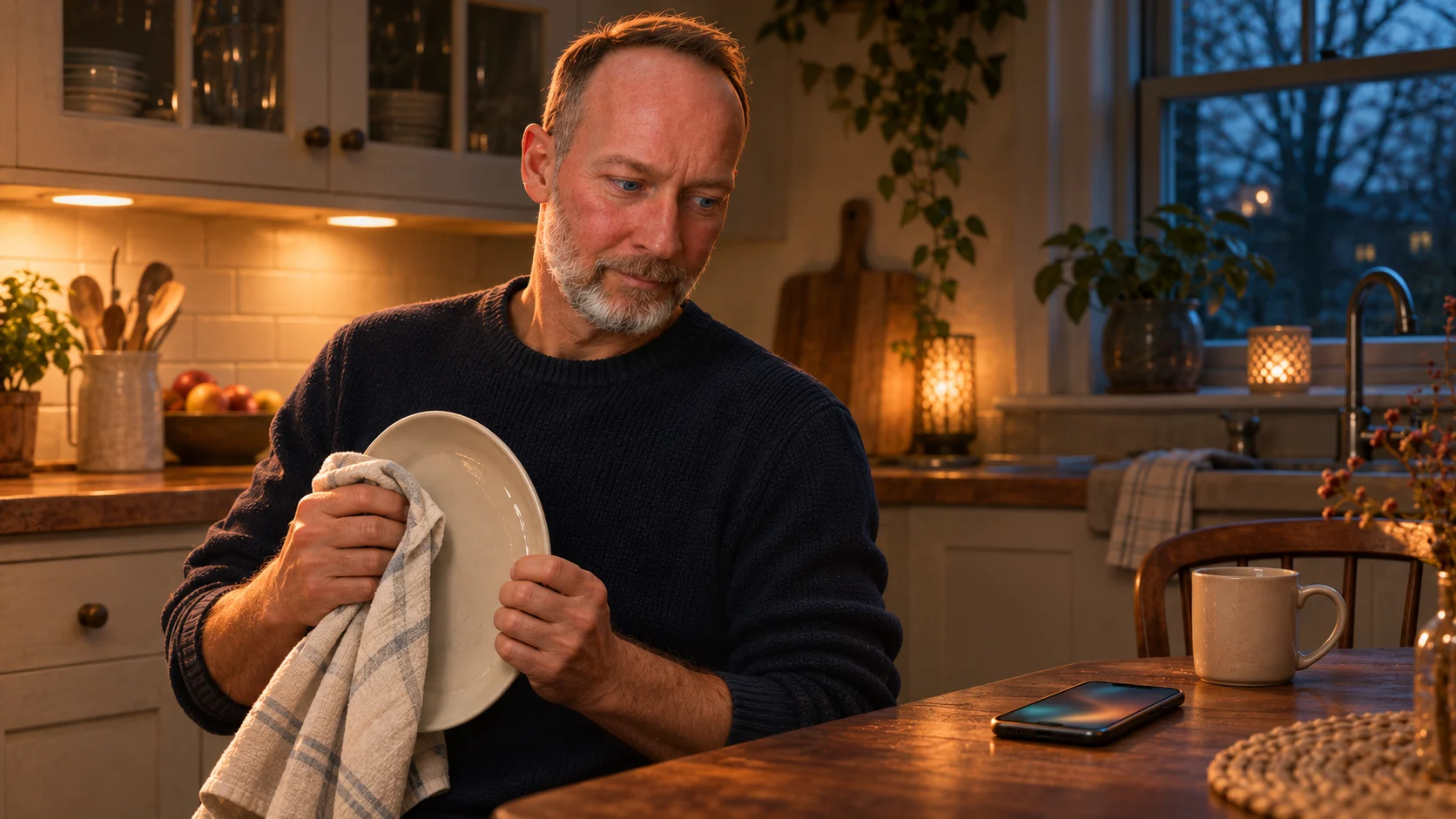
The plate is dry. Mario gives it another pass with the towel anyway. His phone is on the kitchen table, lying there with a calm he finds rather enviable just now.
For this fictional story, Mario plays a father. His equally fictional adult daughter, Lea, is taking the train home after a weekend together. At the door, he said, “Text me when you get there.” She nodded. “Will do.” Then she looked for her headphones once more. They were in her hand.
Mario has a rough idea of when her train should arrive. Earlier in the evening, “rough” was a comfortable sort of word. Now he looks at the clock for the second time. There’s a journey from the station to her apartment, too. And she has a bag to carry. Perhaps she’s buying something on the way.
He picks up the phone. “Everything okay?” he types, then reads the two words. He puts the phone down without sending them. It’s meant as a friendly question. It might also sound as if she’s missed a deadline neither of them agreed on.
A light comes on in the window opposite. Lea’s mug is still in his kitchen. Mario remembers her story about a new coworker. He also remembers how often he forgot to call home when he started his first job. Strangely enough, that hadn’t occurred to him at the door.
Caring without making the journey
Mario wants to know that Lea is okay. At the same time, the evening is hers. He can’t steer her journey from the kitchen table. A message would tell him something. It wouldn’t give him control over the route after the fact.
In the story, closeness meets room to live one’s own life. Asking for a quick text can be perfectly ordinary between two people. How it feels also depends on what they mean by it: a friendly message, a firm arrangement, or a report that’s expected immediately.
This scene offers no universal right number of check-ins. Mario knows Lea and what they agreed. His worry alone doesn’t tell him what’s happening on the journey. But caring about the message isn’t silly, either. Someone matters to him, and she’s somewhere else just now.
Waiting doesn’t stay the same
In 2014, Sweeny and Andrews followed fifty people around a major legal exam. Six surveys showed that waiting for the result felt different over time; the beginning and end were particularly difficult.
The study concerned people’s own exam results over several months, not arrival texts or parents. It can’t tell Mario when to check in. It simply shows that waiting needn’t feel the same from start to finish.
A message and a mug
The phone lights up. “Home. Stopped for bread. And nearly left my headphones on the train.” Mario reads it and laughs. For someone who was already looking for her headphones while holding them earlier, it’s a fairly consistent evening.
He writes, “Glad you got there. This plate’s dry now, too, in case you were wondering.” After a moment, he sends a photo of Lea’s mug. “Next time.” She replies with a laughing face. There’s nothing else they need to settle tonight.
Mario puts the plate away. His relief tells us something about this evening. It doesn’t prove his earlier worry had detected danger. Lea had a journey home and some bread to buy. He had a kitchen, an agreement, and a plate that was dried unusually thoroughly.
Sources: Sweeny, K. & Andrews, S. E. (2014): Mapping Individual Differences in the Experience of a Waiting Period [74]. Reviewed by the editors on November 20, 2026; not independently reviewed by subject-matter experts.