
Rituals & Superstition
Just in case.
And against the unknown.
A lucky charm in a pocket, a knock on wood, a glance at thirteen: what lies within these small moments?
Three fictional stories lead behind a stage curtain, to a kitchen table, and into a hotel. They explore familiar sequences, casual gestures, and signs that can mean more than what is written on them.
Start with the first story →
Taking something familiar along
The Lucky Charm in the Jacket Pocket
Mario has prepared his lines. Behind the curtain, he reaches into his pocket once more anyway. The small stone inside reminds him of a friend—and a considerably smaller performance.
Read the story →
Carefully taking back a sentence
Knock on Wood Three Times
Klara says nothing can go wrong tomorrow. Then she knocks on the table. Her partner knows the gesture and has a remark about the wood being used.
Read the story →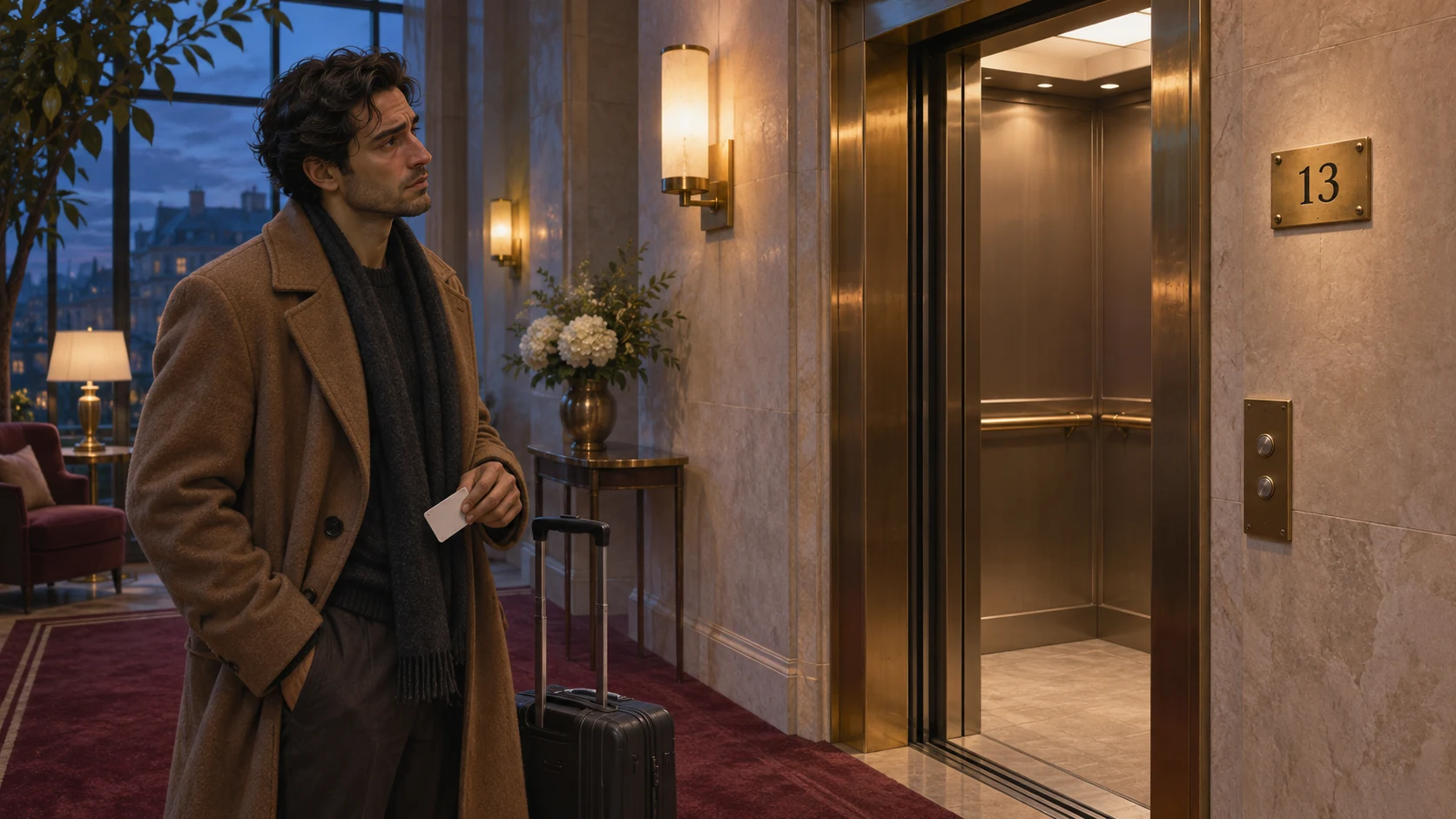
Bringing a meaning along
The Thirteenth Floor
Amir has his key card, the corridor is welcoming, and the room is just around the corner. Only the floor number holds his gaze longer than expected.
Read the story →