
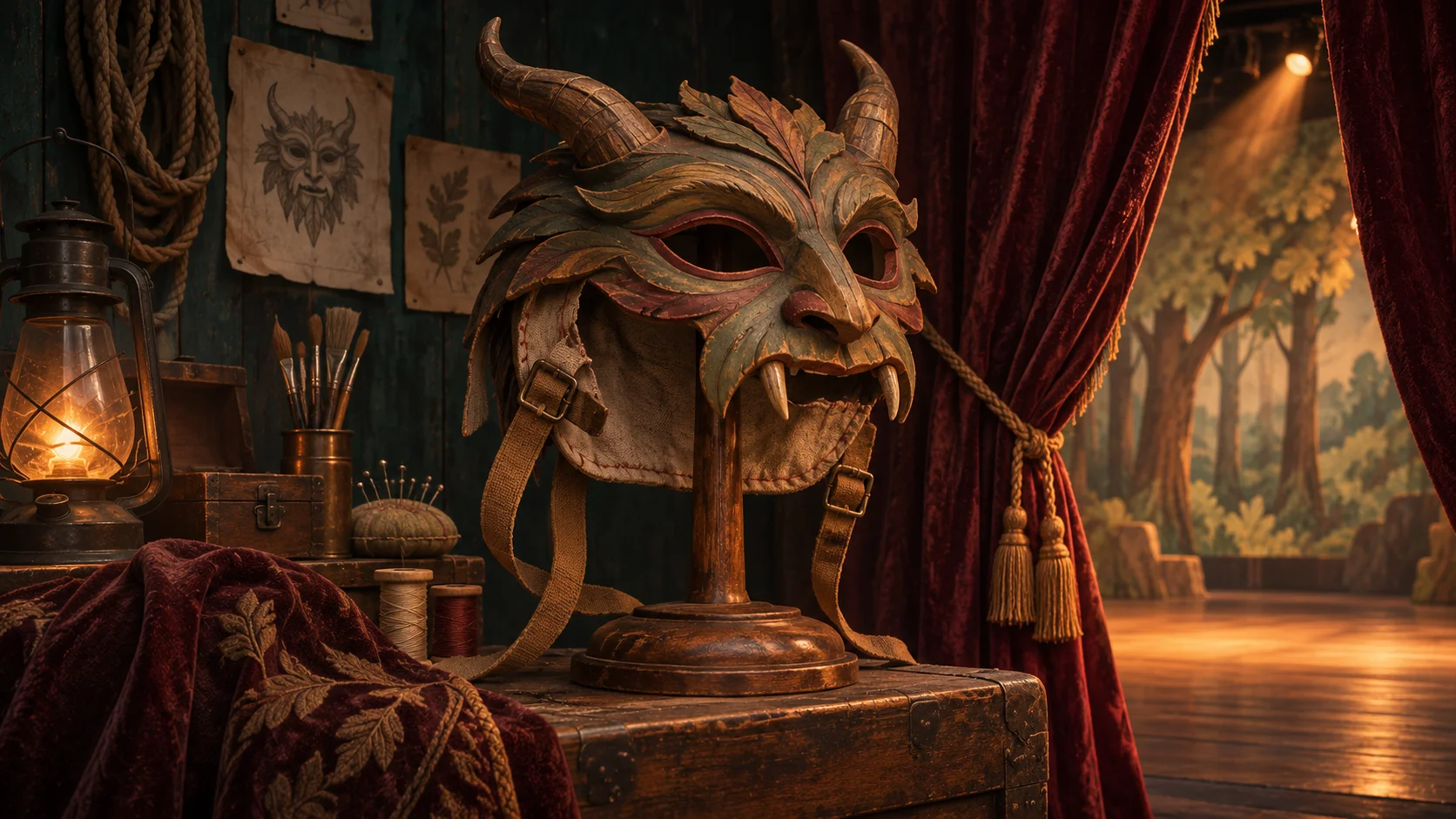
In the forest, it is an unknown sound. At the movies, it becomes a scene. And the next day, we tell the story again.
What happens when fear becomes the material of a story? Here, literature, entertainment, and the question of how we speak about others meet. We begin with fictional scenes, read a literary example, and look at a study of voluntary fear.
A sound becomes a story.
Imagine two people describing the same nighttime walk. One reports a branch snapping. The other begins, “There was something between the trees.” The choice of words already sets a different frame.
This fictional example shows a storytelling decision: which detail comes to the foreground? What stays unspoken? In our scene, expectation arises precisely where an answer is missing. An exciting story is not, however, evidence of actual danger.
In “Why Does Darkness Frighten Us?”, you can view the same forest with two different captions. The image stays the same; the narrative context changes.
Who gets called a “monster”?
Mary Shelley's Frankenstein of 1818 offers more than an encounter with an uncanny being. The creature speaks for himself of loneliness and the wish for companionship. How others treat him is therefore part of the plot. Literary source [5]
Our reading connects the monster with questions of belonging and responsibility: who is allowed to speak? Who is rejected? Who takes responsibility for their actions?
When relating such questions to life together, we should distinguish fictional characters from real people. An unusual appearance makes nobody dangerous. A literary label must not slip unnoticed into a judgment about a person.
What does the other perspective change?
In our monster story, a figure stands at the edge of a forest. If we tell it from a walker's perspective, the figure's intention remains unknown. If we give the figure a voice of their own, we might learn that they are looking for their dog.
This shift in perspective changes the information we receive. It does not automatically make a character innocent or credible. With fiction, we can therefore ask about both actions and portrayal: what does the character do, and who tells us about it?
Why do we buy a ticket?
A ticket turns a scare into an agreed event: there is a place, a beginning, and a decision to take part. Under recreational fear, the voluntary play with fear also appears as a subject of research.
The Fear Paradox introduces the field study by Andersen and colleagues. Here, we are interested in the cultural question: how does a threatening story become an evening together? Thrill describes an appealing excitement but does not promise enjoyment for everyone.
The story “Why Do We Peek Through Our Fingers?” takes this question into the movie theater.
A story can be heard too.
Our fictional sound workshop shows a microphone in front of a creaking door. In a film, the same imagined sound may belong to an unknown room. How its narrative role changes with the image is explored in “How Does Fear Find Its Sound?”.
The article connects this example with a study of the interplay between music and images. Methods and limits appear in “The Sound of Fear”. Study [8]
One film, different experiences.
Imagine an evening at the movies together: one person laughs after the scare, another looks away, a third wants to discuss the character. This fictional scene raises a social question: how do we leave room for different responses?
For our discussion, distinguishing voluntary entertainment from actual threat matters. Agreeing to an evening of horror is no measure of someone's courage in everyday life. And a shared audience does not yet mean a shared feeling.
Feeling that an experience has brought us together is not the same as a lasting increase in closeness. Research on social connectedness examines precisely this distinction. Studies [15]
The related story: Sharing the Scare →Too similar to be just a thing?
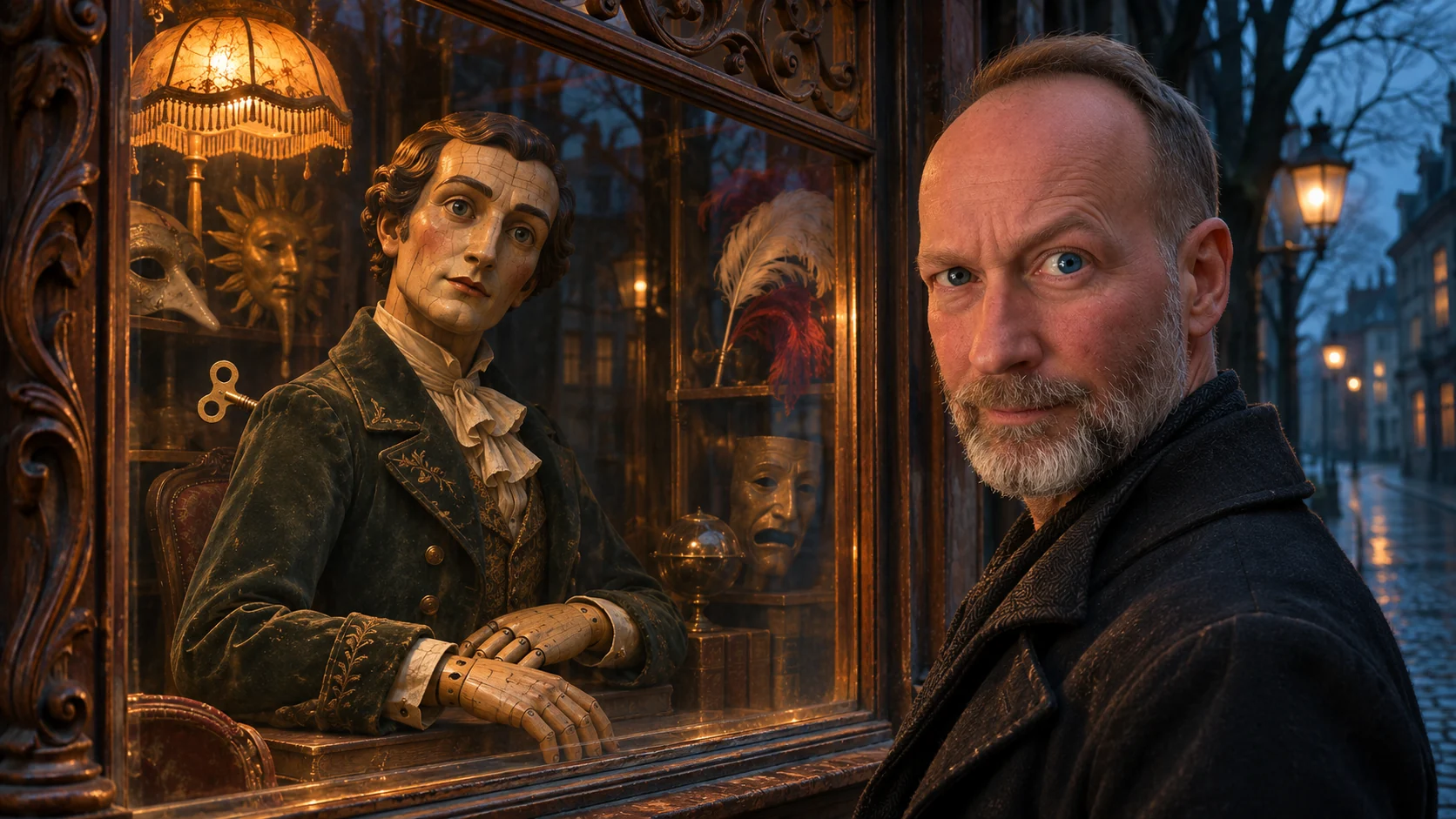
Through posture, clothing, and gaze, a theater puppet can be staged as a counterpart. In our literary discussion, the uncanny arises where the expectation of a living response and the visible artificiality do not quite fit together.
Hoffmann's The Sandman develops this question through Olimpia: what does Nathanael actually recognize in her, and what does he read into her? Our reading connects the artificial figure with the wish to be understood. It claims no general effect of humanlike puppets. Literary source [10]
Read the story: Why Can a Puppet Feel Uncanny? →
Where people are absent, traces remain.
Abandoned places do not tell stories on their own. We read signs of use, invent backstories, and choose titles for pictures. Our empty hotel corridor shows how an everyday object can become a starting point for the uncanny. This is a literary reading.
The related story: Abandoned Places →Which stories are still missing?
These literary examples and studies do not represent all cultures or eras. How other storytelling traditions deal with fear, which characters change, and who is allowed to tell stories are questions for further articles.
We distinguish literary readings, fictional examples, and empirical findings. They can pose questions to one another, but cannot serve as proof for one another.
Sources: Shelley (1818) [5] · Andersen et al. (2020) [3] · Blumstein, Bryant & Kaye (2012) [8] · Hoffmann (1816) [10]. Reviewed by the editors on November 6, 2026; not independently reviewed by subject-matter experts.