
The sentence is about a closed garden gate. Nora hears it and turns around anyway.
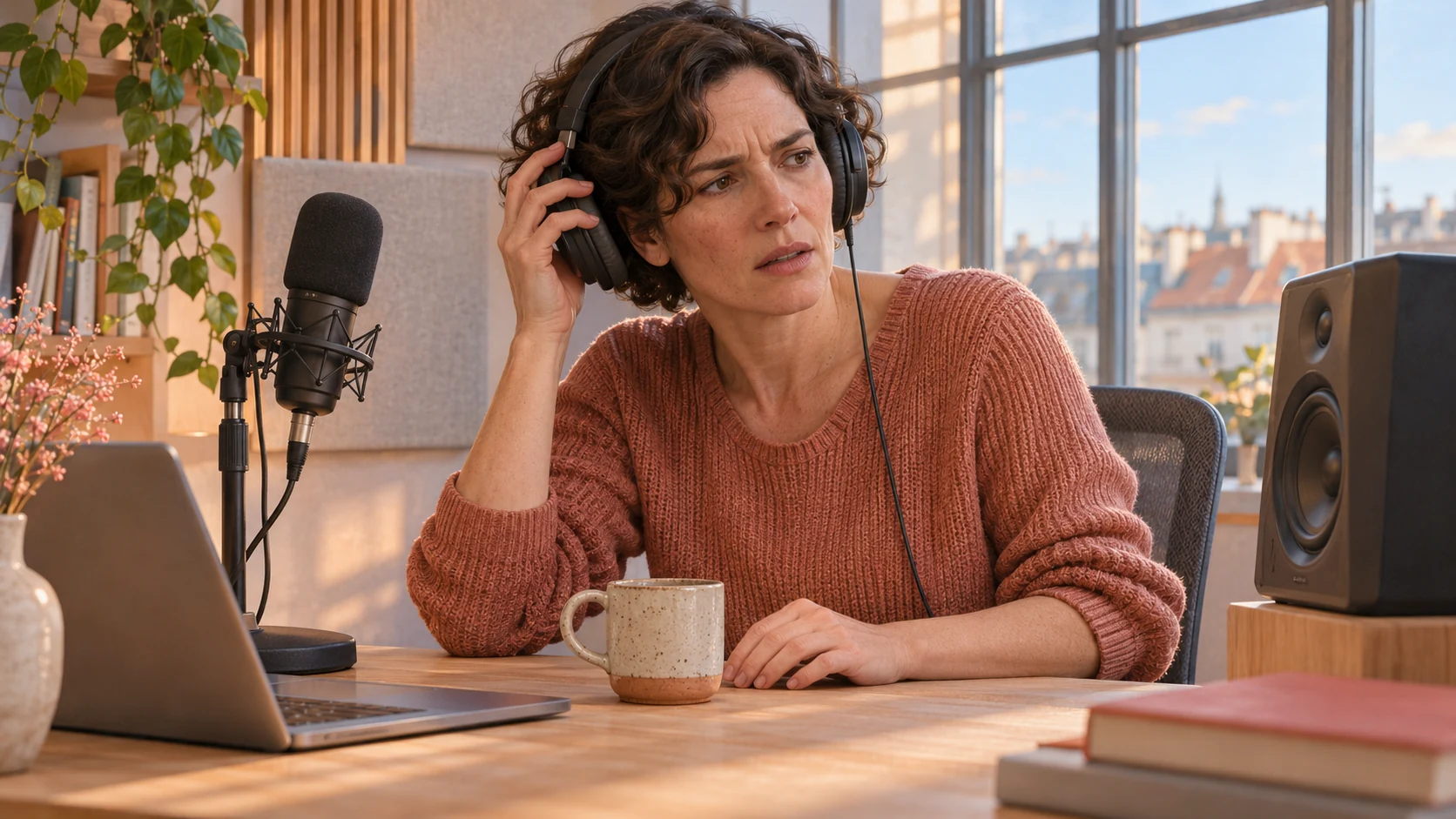
In her brother's small recording studio, two cups stand on the table. Late afternoon light falls through the window. It smells of coffee; somewhere, ventilation hums. Her brother is fetching water. His voice comes through the headphones.
With his consent, he has had an artificial version of his voice made for an audio project of his own. Nora knows this. He explained it before pressing play. Now that voice says a sentence he never recorded in that form himself.
The voice sounds close. The emphasis is a little different, the pause in an unfamiliar place. Nora lifts one ear cup. Perhaps he spoke from the hallway after all. But all she hears there is the clink of a glass.
When he returns, she asks, “You really didn't say that?” He shakes his head. She looks first at him, then at the speaker. The sentence about the garden gate has suddenly become more interesting than a garden gate usually deserves.
This scene and its characters are entirely fictional. No real voice is played or reproduced.
A voice brings someone with it
For Nora, a particular person stands behind this sound. She thinks of car rides together, his unfinished sentences, the quick breath before a joke. In the artificial version, she recognizes enough of it to miss the rest.
A voice clone can generate speech that sounds like a particular person. The words heard therefore need not be a recording of something actually said. In our scene, this very difference has been explained beforehand—and still feels strange for a moment when she hears it.
Nora's trust in her brother is not in question. She knows the origin of the demonstration. Here, the faint unease comes from a peculiar overlap: his voice is already in the room while he is still fetching water.
Familiarity changes the judgment
In 2025, Rosi, Soopramanien, and McGettigan compared recordings and voice clones. Their analysis included 47 people who knew the voices from personal experience and 47 unfamiliar listeners. In perceived trustworthiness, the familiar group preferred the recordings, while the unfamiliar group preferred the clones. Read the original study [41]
The study used English-language material and examined social judgments, among other things. It establishes neither a general fear of artificial voices nor actual trustworthiness. Nora's puzzlement belongs to our story; it was not measured there.
One sound is still missing
Her brother plays the real recording for comparison. Nora listens closely. Then he plays the artificial sentence once more.
“Well?” he asks.
“You sound a little tidier in that.”
He laughs. At the same moment, his spoon knocks against the cup. Nora takes off the headphones. That little jumble feels familiar at once.
Sources: Familiarity and voice clones [41]. Reviewed by the editors on November 7, 2026; not independently reviewed by subject-matter experts.