
Technology & The Uncanny
Almost familiar.
And all the stranger for it.
What unsettles us when a face, a voice, or a response almost fits too well?
A bright media exhibition, a recording studio, and a home at dusk. Three fictional stories about technology that raises expectations—and the small distance between recognition and understanding.
Start with the first story →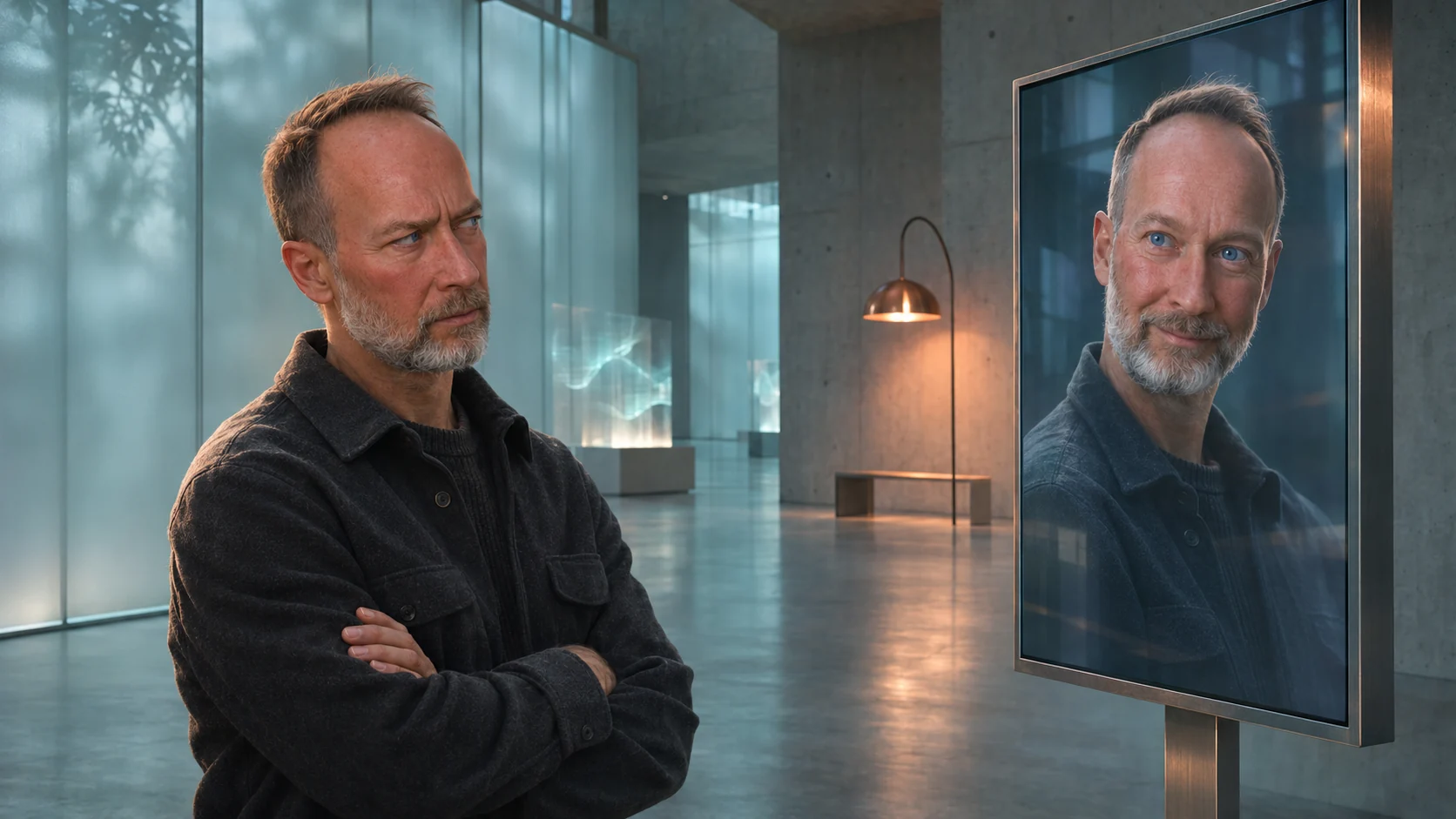
Recognizing the face
The Face on the Screen
Mario encounters a face he knows well: his own. The blue eyes are right. The smile simply lasts a little longer than he would like. How much needs to fit for something to remain familiar?
Read the story →
Encountering the voice
The Familiar Voice
Nora knows her brother had his voice artificially recreated. When the sentence comes through the headphones, she turns around anyway. A story about recognition and the context we hear along with a voice.
Read the story →
Attributing intentions to the house
The House Answers
The light comes on, the blind rolls down. Henrik is still busy with his groceries. His home seems a step ahead of him. Why do we sometimes talk to things as though they were up to something?
Read the story →