
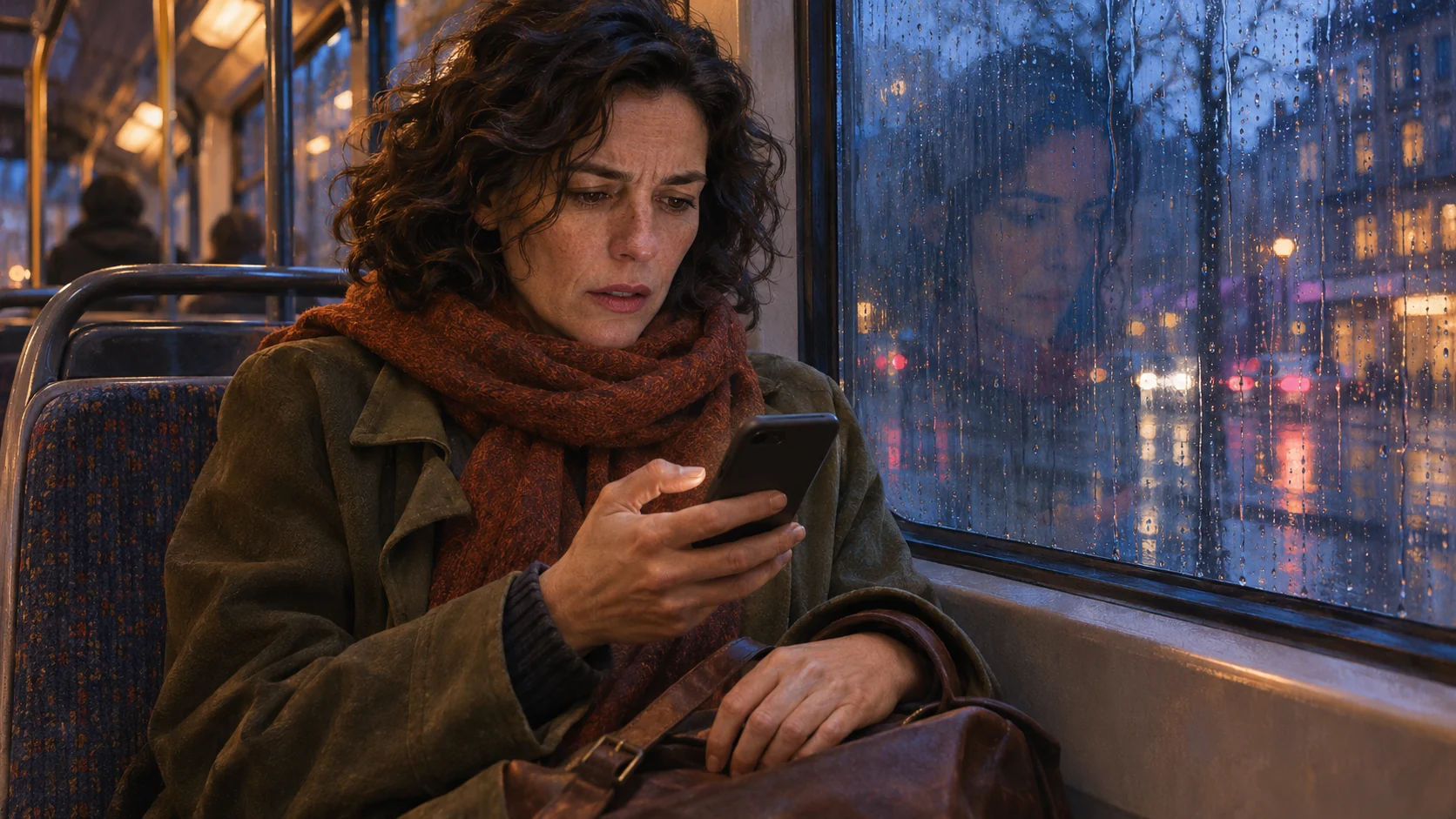
Lea meant to check where to change streetcars. Now her thumb pauses over a headline.
The streetcar moves through the rain. Shop lights overlap in the window. On the display, there is something about a mysterious disappearance and a new lead. She knows the place name. Not the case.
She reads the headline a second time. She would actually prefer to think about something else. The shopping, dinner, the question of why her umbrella always ends up at the bottom of her bag when it rains. Still, she stays with this short text.
What happened? Has someone turned up again? She does not expect pleasant reading. But the unanswered question is there now, along with a faint unease.
When the streetcar brakes, she briefly rests her phone on her bag. Then she picks it up again and opens the article.
This scene, its characters, and the news item mentioned are entirely fictional.
What a click leaves open
Morbid curiosity here means an interest in information about death, violence, or harm. In this research context, the term is not a diagnosis. About the concept [38]
At first, we observe only one decision by Lea: she opens the article. Whether she wants to understand, feels concerned, wishes to check a suspicion, or has several reasons remains open. We narrate her thoughts, but a real click would not supply those thoughts along with it.
The headline is not a complete story either. Lea does not know what context is missing. Between her expectation and the text she is about to read, there is room for surprises. Looking alone does not tell us how someone evaluates what they see.
Unpleasant images are not always avoided
In three studies in 2017, Suzanne Oosterwijk had people choose images. Negative social scenes were chosen more often than isolated depictions of bodily harm or natural threats; negative social scenes were also preferred to neutral images. Read the original study [38]
The studies demonstrate voluntary approach toward certain negative content. They do not prove enjoyment of suffering or explain every news click. They mainly examined young students making prescribed image choices, rather than everyday news use over an extended period.
The stop arrives anyway
The article answers some of her questions. Others remain open. Lea reads one more paragraph, then puts her phone away. Right now, she does not want to know every detail.
Outside, the name of her transfer stop passes by. She gets up, takes her bag, and finds the umbrella immediately. Some questions have pleasantly unremarkable answers.
Sources: Research on morbid curiosity [38]. Reviewed by the editors on November 7, 2026; not independently reviewed by subject-matter experts.