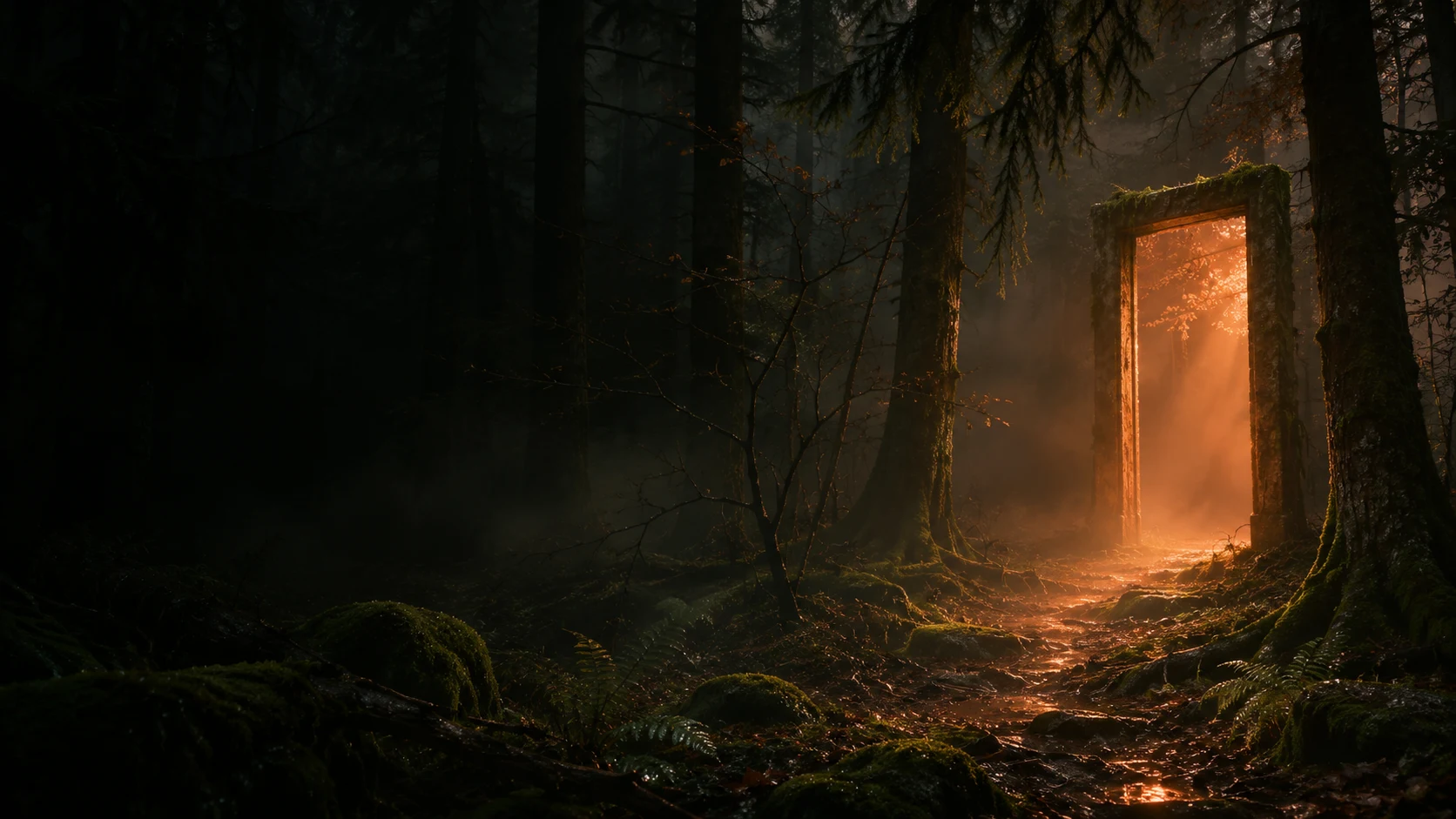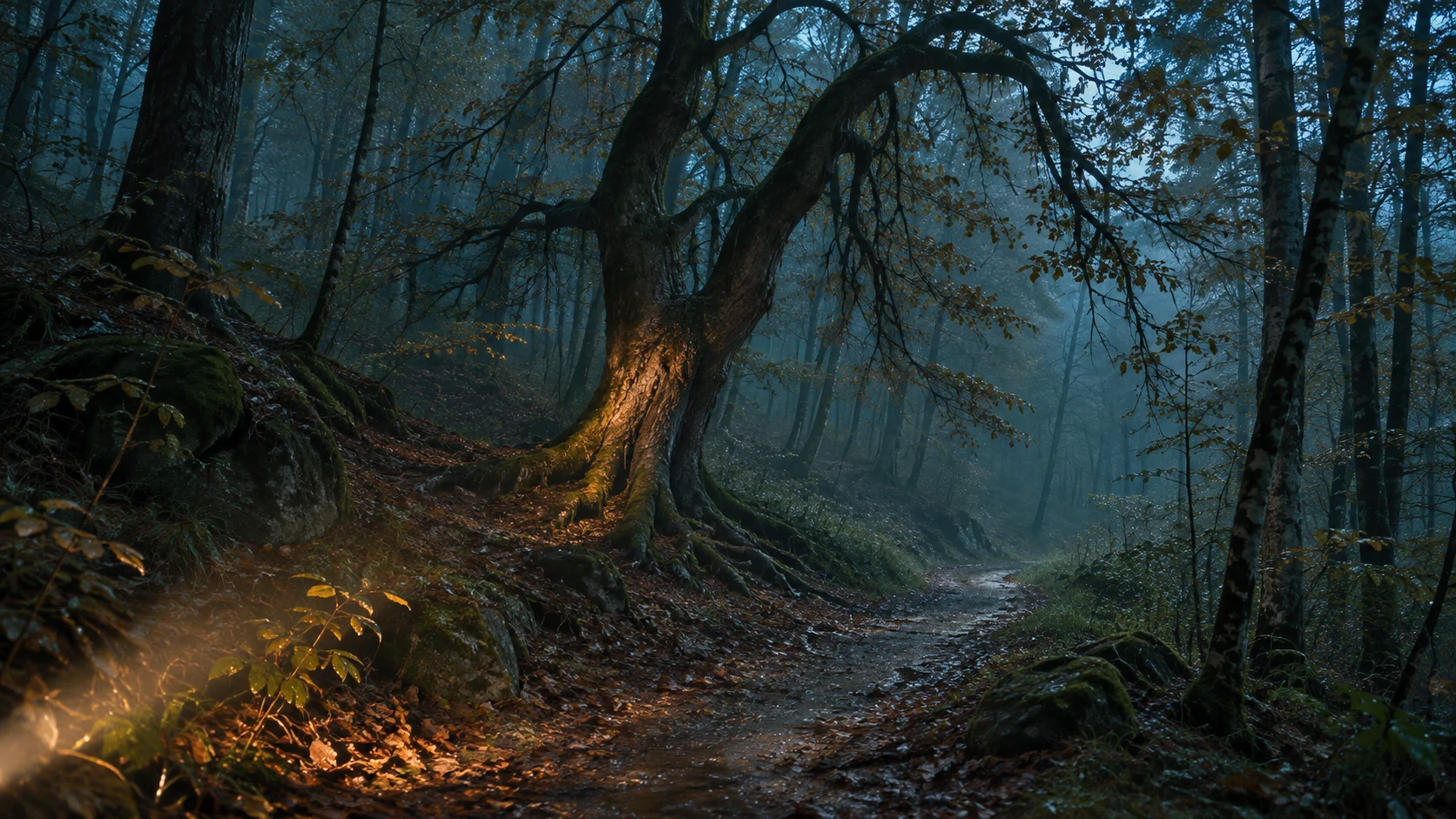
By day, it was just a path between trees. Now the beam of light reaches only a few steps ahead. Somewhere, a branch snaps. What was that?
This fictional scene needs no visible monster. Its suspense comes from a question we cannot yet answer. A branch might break beneath an animal. It might also simply have fallen from a tree.
When clues are missing.
In low light, some things are harder to make out. What is moving over there? How far does the path go? In our scene, several explanations remain possible. Darkness is not an active danger here; it changes the information available to us.
Whether this produces fear, curiosity, or calm cannot be read from the light alone. A nighttime walk with people we know and an unfamiliar path can be very different situations. Our little illustrated story below invites you to explore this distinction.
What was studied?
In 1998, Grillon and Ameli studied several factors under laboratory conditions, including the effect of darkness on the startle reflex. In their experiment, darkness increased the response to a startling stimulus. They also examined anticipation of electric stimulation and the effect of attached electrodes. Read the study [4]
This is a specific finding about a bodily response in an experimental situation. It neither proves that everyone fears darkness nor, by itself, explains the conscious feeling of a nighttime walk.
What remains open?
In a particular situation, how much do visibility, experience, expectation, and company contribute? A single explanation cannot answer that. Nor would the plausible story about our ancestors in dangerous darkness, by itself, provide evidence for the origins of present-day fears.
Reviewed by the editors on November 6, 2026 · Not independently reviewed by subject-matter experts. Sources & editorial approach