
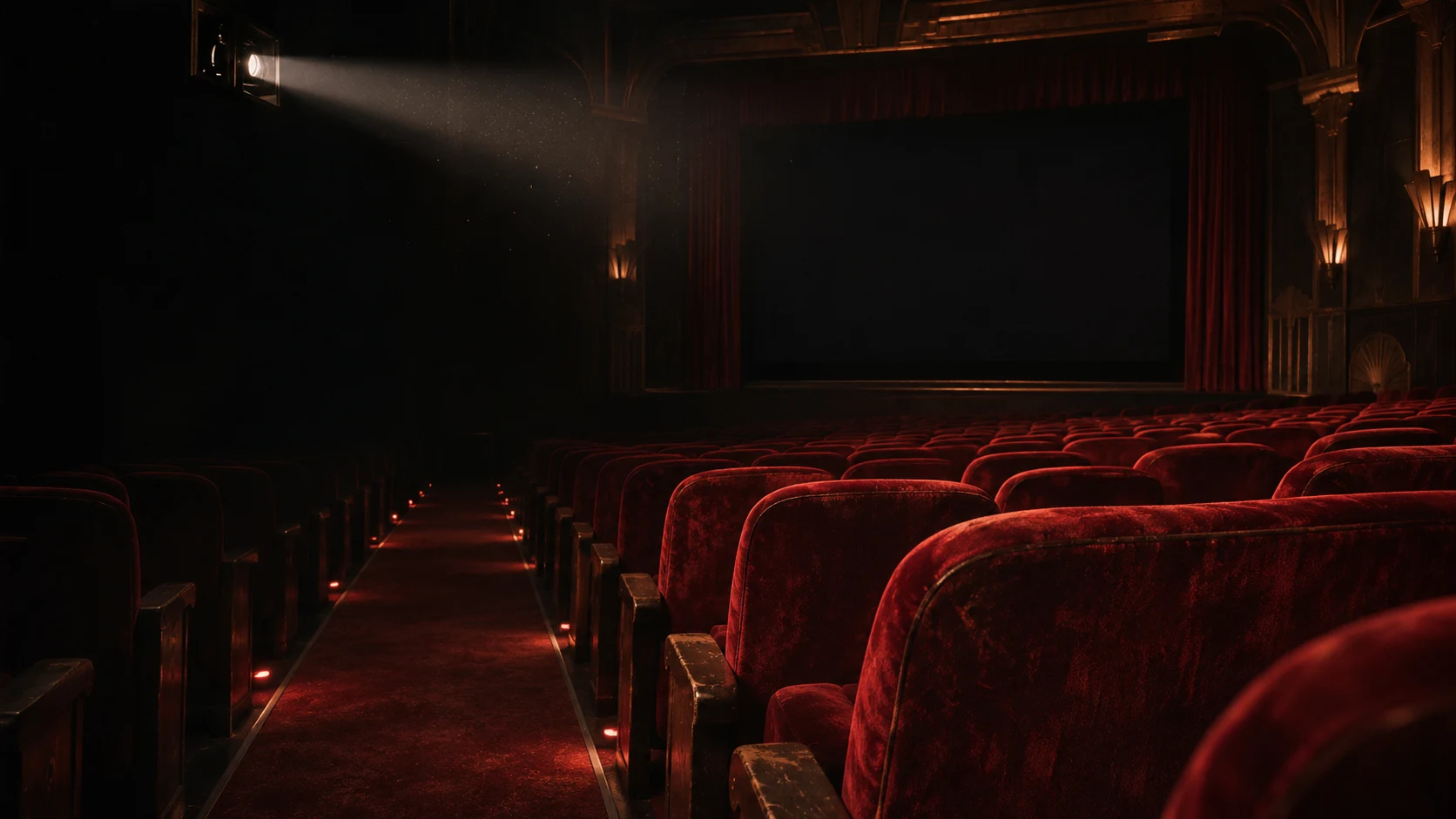
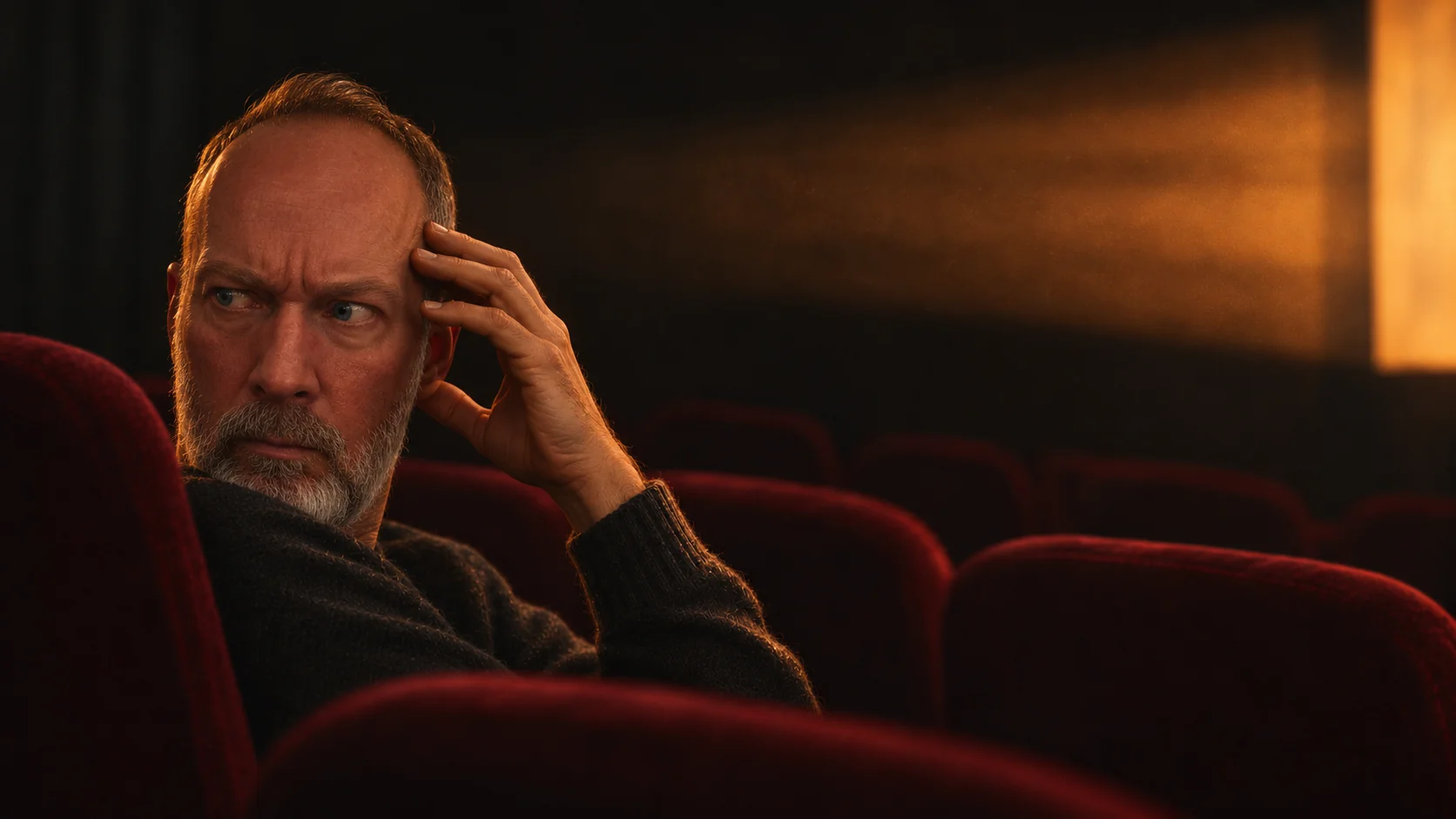
A hand covers the eyes. A gap remains open. We want some distance—and to know what happens next.
Why do we stay in our seats?
This fictional movie-theater gesture captures our topic: something can make us recoil and interest us at the same time. “The Fear Paradox” is our name for that question here. It does not mean that every fear is pleasant or that everyone likes horror.
Thrill is an everyday word for appealing excitement. Recreational fear in the research presented here refers to a playful interplay of fear and enjoyment. Background [3]
Three settings, different conditions.
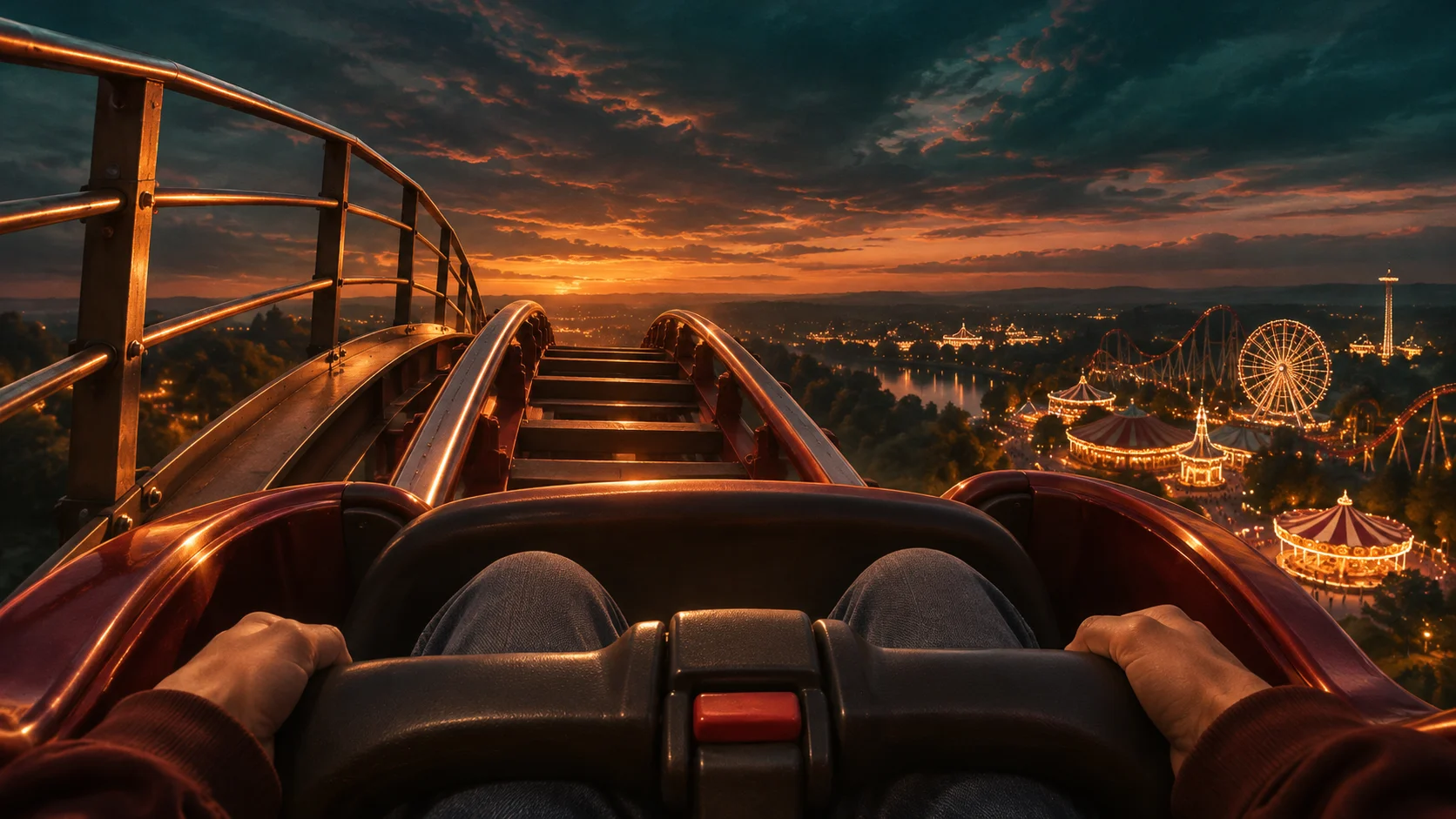
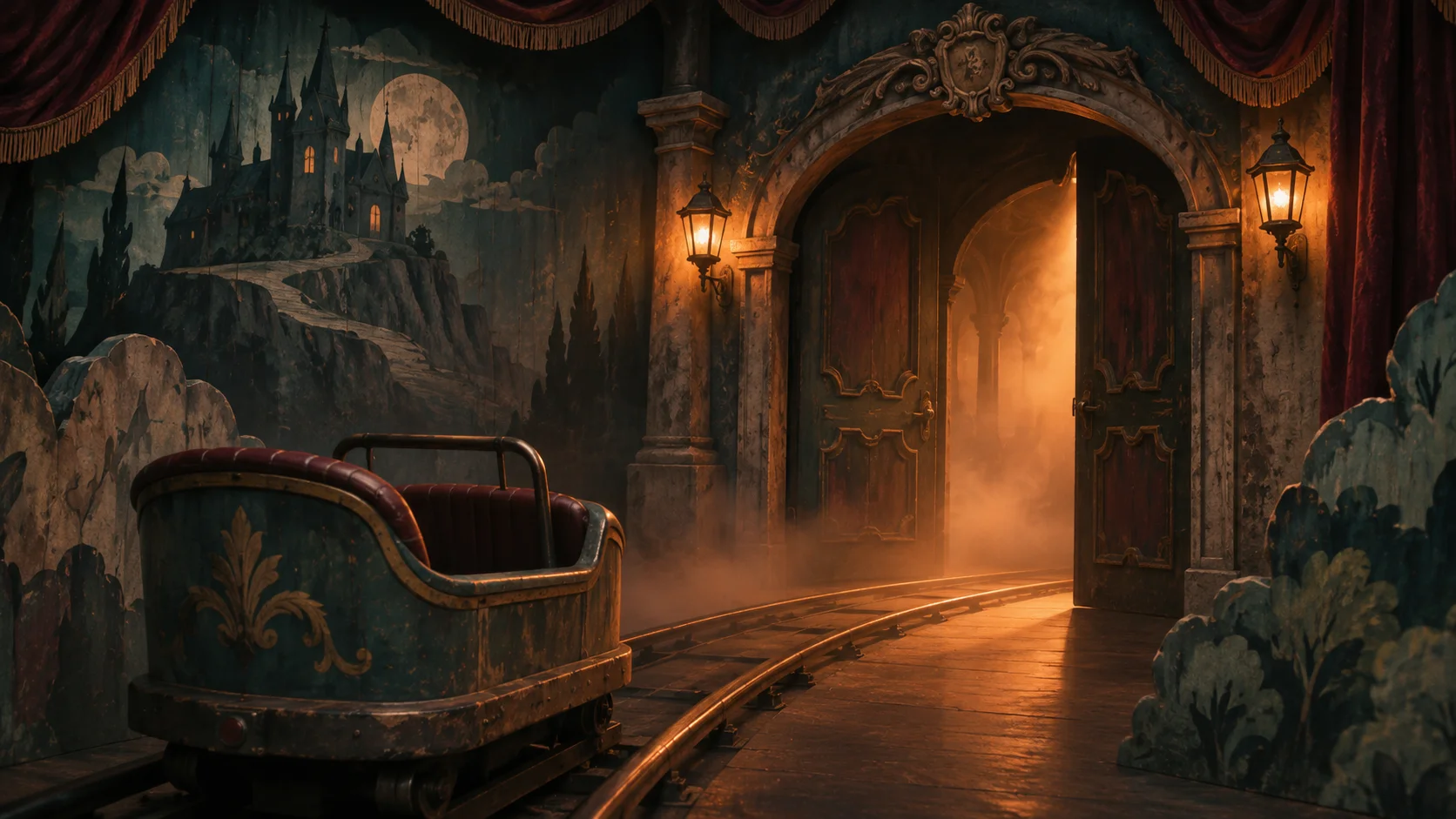
Our pictures place three questions side by side. At the movies: how does knowing that something is fiction shape the experience? On a roller coaster: what role is played by choosing the ride and trusting the equipment? On a haunted ride: how do we encounter something that is both a stage set and a surprise?
These comparisons are prompts for thought. A roller coaster involves physical movement, a movie tells its story on a screen, and a horror attraction can stage direct encounters. They cannot be reduced to an identical reaction. The opportunities for taking a step back differ, too: looking away at the movies is different from being on a ride already in motion.
In the glossary, context sums up such surrounding conditions. Our story “Why Do We Peek Through Our Fingers?” follows the movement between curiosity and distance.
The image does not show everything.
The haunted-ride picture leaves open what lies behind the door. In the roller-coaster picture, the track vanishes beyond the crest. Mario turns away from a screen whose action remains hidden from us. In this way, the illustrations leave room for expectation.
This is our interpretation of the design, not a measured image effect. The images were created specifically with AI. Mario's visit to the movies is also fictional; his appearance is based on his portrait photographs. The pictures do not document actual visits or facilities. Visual cues can support our stories; fear nevertheless cannot be limited to sight. Even in our examples, sounds, movement, or the narrative itself might also play a role.
One Image, Two Stories invites you to compare different captions. “How Does a Monster Come into Being?” asks how an unknown figure can acquire a different meaning through a shift in perspective.
A closed door also leaves room for conjecture in “Why Can Waiting Feel Eerie?”. “How Does Fear Find Its Sound?” adds hearing to the picture.
A finding from a horror attraction.
For the field study by Andersen and colleagues, 110 people signed up; 92 were included in the analysis. Four people without the main questionnaire were excluded, along with four who had stopped the tour and ten with missing or unusable heart-rate data. Field study [3]
In ratings of individual scare stations, reported enjoyment was highest at moderate fear levels. This association did not appear in the overall rating of the visit, however. That distinction gets lost in the shorthand “moderate fear is the most fun.”
The observation does not provide an ideal amount of fear for any individual. Whether the result generalizes to movies, books, or roller coasters remains open. Methods and limitations [3]
Knowing it is artificial. Recoiling anyway.
With a movie prop, the explanation may make immediate sense while the repulsive effect remains. Our workshop scene plays with this gap between knowledge and experience. Disgust and fear play different roles here.
The related story: Fear & Disgust →The neighboring seat is part of the movie, too.
Who sits beside us becomes part of the experience in our movie-theater scene. One person startles; another is already laughing. Whether this produces connectedness is a research question in its own right. The story leads to findings and their limitations.
The related story: Sharing the Scare →Not everyone wants to go through the door.
Imagine three people in front of the same attraction: one is looking forward to the next scare, one would rather wait outside, and one is undecided. This fictional scene needs no ranking of courage. Different preferences are part of the picture.
How narrative, company, experience, and the particular situation interact remains open. The paradox invites further questions. It is neither an invitation to cross your own boundaries nor an explanation for every form of fear.
Source: Andersen et al. (2020) [3]. Reviewed by the editors on November 6, 2026; not independently reviewed by subject-matter experts.